Many IPTV providers are competing for your attention online, prices typically range from $10 to $20 a month, and most of them make identical-sounding promises about “99.9% uptime,” thousands of channels, and crystal-clear 4K streaming. You want live TV without the cable bill, but you have no reliable way to tell which IPTV subscription will hold up under pressure and which one will buffer every twenty minutes for three weeks before quietly disappearing. At its core, an IPTV subscription is a service that delivers live television channels and on-demand content through your internet connection instead of a cable line or satellite dish. That simple shift opens up a genuinely better deal for most households. This guide walks through what to look for, how to price it fairly, and what a competitive IPTV service actually includes, using Mom IPTV as a concrete reference point throughout.
How an IPTV subscription actually works
Traditional TV sends signals through a physical cable running to your home or a dish mounted on your roof. IPTV routes the same live channels and video libraries through your internet connection, which removes the hardware installation and, with many providers, eliminates long-term contracts. Internet delivery can also reduce some regional restrictions, though availability and contract terms still vary by provider. The real tradeoff is this: your experience depends entirely on your internet speed and the quality of the provider’s server infrastructure. A weak server on the provider’s end can ruin a perfectly fast home connection.
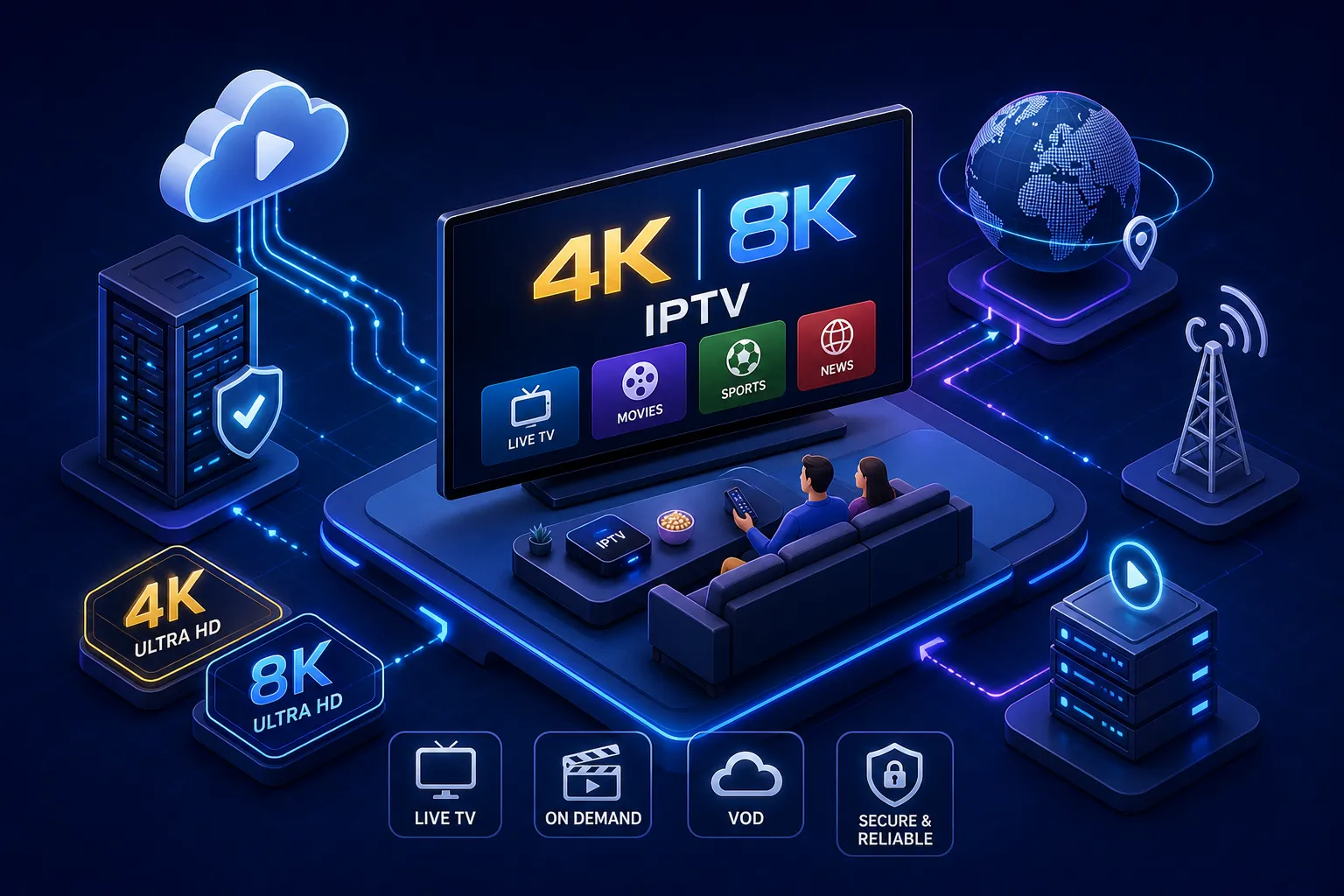
When you subscribe, you typically get access to three content types: live channels covering news, sports, and entertainment; a video-on-demand library with movies and full TV series; and in some cases catch-up TV that lets you watch recent broadcasts after they air. Better providers stream in HD, FHD, and 4K depending on your connection speed. For 4K streaming without buffering, you need a minimum of 25 Mbps per stream, with 50 Mbps being a safer target if your household runs multiple devices at once. Package size and streaming quality vary dramatically between providers, and price alone tells you almost nothing about either.
What separates a good IPTV plan from a mediocre one
Before you pay anything, run every provider you’re considering through these five criteria, they cover the areas where most services fail or mislead buyers.
Channel count and content variety
A high channel number means nothing if the channels you actually watch aren’t in the lineup. Ask whether the service covers US broadcast networks, major sports channels like ESPN and NFL Network, and any international or language-specific programming you need, Spanish-language networks, for example, or a regional sports channel that doesn’t show up on basic cable tiers. The spread across the market is wide: some services offer a few thousand channels, while others pack more than 20,000 into a single IPTV subscription. What matters is the right channels, not just a big number.
Streaming quality and server reliability
Picture quality matters, but consistent uptime matters more. A 4K stream that freezes every few minutes is worse than a stable HD stream. Look for providers that address their server infrastructure and anti-freeze technology directly, not just list resolution options in bullet points. Anti-freeze systems work by combining content delivery networks, load balancing across multiple servers, failover routing, and adaptive bitrate streaming, all of which keep playback running when a single server slows down or a brief network dip hits. Providers typically claim uptime between 97% and 99.9%, though testing methodology is rarely disclosed, and that gap translates directly to what you experience on a busy Sunday afternoon when a playoff game is on.
Device compatibility and app support
Your IPTV subscription should work on the devices you already own. Most reputable services support Amazon Firestick, Android TV, Samsung and LG Smart TVs, iOS, and Android phones. Some also support Roku, MAG boxes, Kodi, and M3U-compatible players. M3U compatibility in particular matters because it lets you use the same subscription across multiple apps without being locked into one ecosystem. If a provider’s compatibility list is vague or doesn’t mention your device at all, treat that as a warning sign.
Customer support quality
This one is easy to skip until something breaks at the worst possible moment. Ask whether the provider offers live support or just a ticket system with a 48-hour email queue. Many top-rated IPTV service providers offer 24/7 real-time support via Page Contact or email. Response speed during a technical issue is the difference between fixing a frozen stream and missing the game entirely. Providers with serious infrastructure tend to back it up with serious support; the two go together more often than not.
What fair pricing looks like for an IPTV subscription in 2026
The mainstream price range for reputable IPTV services in 2026 sits between $10 and $20 per month. Annual plans typically run $65 to $129 per year, which brings the effective monthly cost down to around $5 to $8. Providers that charge significantly more without a clear differentiator are hard to justify. Those that charge well under $10 per month often cut corners on server quality or support, and those are exactly the corners that matter most when something goes wrong.
Many providers also offer tiered IPTV plans based on simultaneous connections. A single-connection plan works for one person on one device. A household with multiple TVs or multiple users watching different things at the same time needs two or more connections. Factor that into your per-month comparison rather than comparing base prices alone. A $12 per month single-connection plan and a $16 per month two-connection plan are not really in the same category.
How to choose the best IPTV subscription for your household
The best IPTV subscriptions aren’t just the ones with the longest feature list, they’re the ones that match your specific viewing habits, devices, and budget. Start by listing the channels you actually watch each week, then check whether each provider’s lineup includes them. If you watch a lot of live sports, prioritize providers that specifically call out anti-freeze technology and multiple server redundancy. If you have a mixed household with different devices and viewing preferences, M3U compatibility and multi-connection plans become essential rather than optional.
Comparing IPTV plans and prices side by side also means looking beyond the monthly base rate. A plan at $13 per month with a genuine 7-day money-back guarantee is a better deal than a $10 per month plan with a 24-hour trial and no refund policy, because the cost of being stuck with a bad service for a month easily outweighs the $4 difference. The providers worth your money are transparent about what you’re paying for at every tier.
What a competitive IPTV subscription looks like in practice
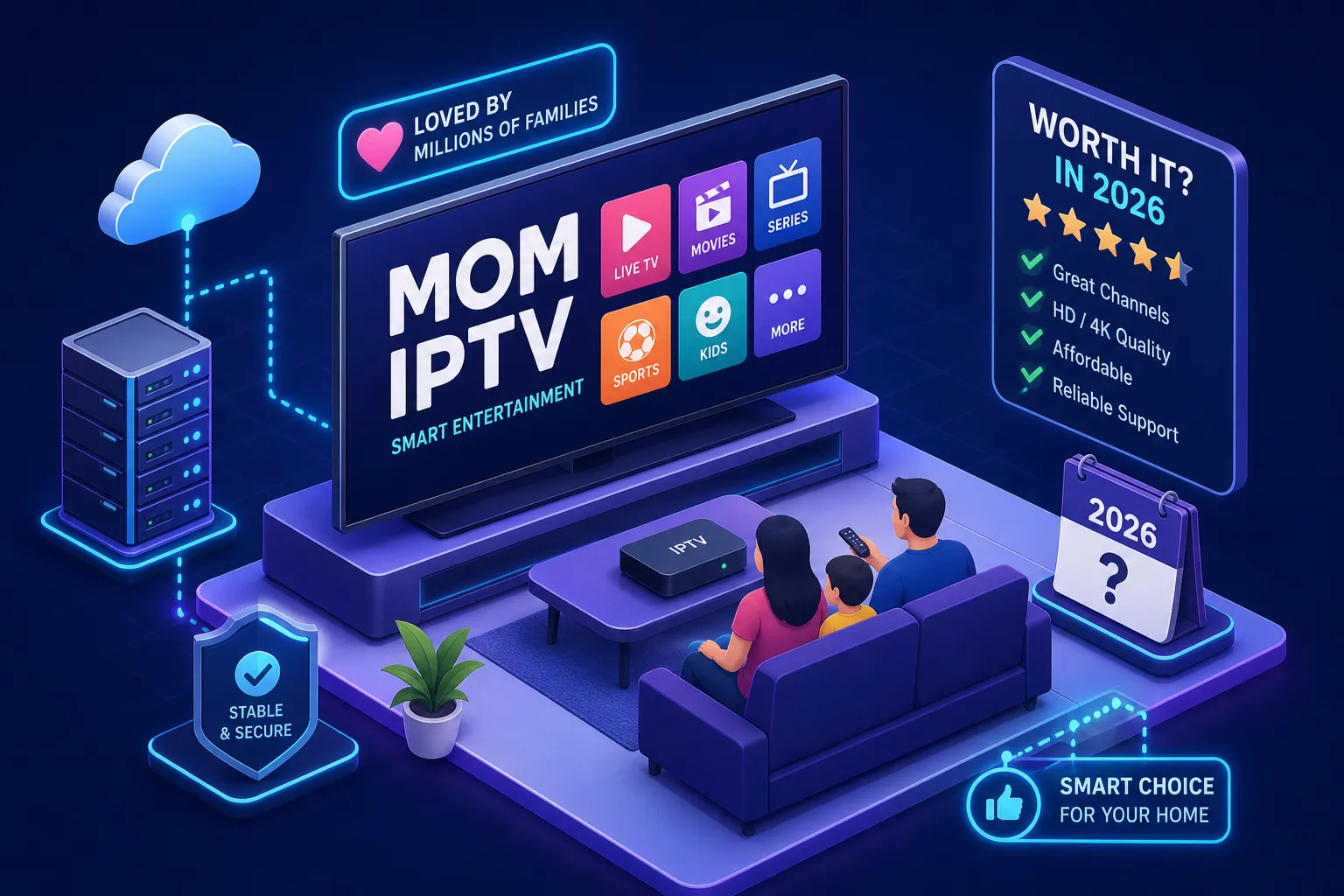
Those criteria become concrete when you look at a provider that actually meets them. Mom IPTV is a useful benchmark because it checks all five evaluation boxes without unusual pricing. The service includes 22,000+ live channels across sports, news, entertainment, and international content, plus 120,000+ on-demand titles. Streaming runs in HD, FHD, UHD, and 4K, with anti-freeze server technology built into the infrastructure to reduce buffering at the source. Plans start at $13 per month, with a 7-day money-back guarantee and 24/7 live customer support via WhatsApp. That combination of channel volume, streaming quality, and price is what a competitive IPTV service looks like in 2026.
The trust signals matter just as much as the feature list. A 7-day money-back guarantee signals genuine confidence in the service, compare that to providers offering only a 24-hour trial with no refund option, where you get one quiet evening to evaluate performance before you’re locked in. A free trial protects you before payment; a money-back guarantee protects you after it. A clear refund policy tells you something real about how a provider expects their service to perform. Easy-to-find live support tells you the same thing. Providers that hide both behind a footer form are telling you something too.
How to test a provider before you commit
A 24-hour free trial gives you just enough time to check picture quality and channel availability on a quiet Tuesday night. It doesn’t tell you how the service holds up during a live sports event on a packed Sunday when thousands of users are streaming simultaneously. A 7-day money-back guarantee gives you enough time to run real tests: stream a full game, check how quickly VOD titles load, contact support with a question, and switch between devices. Prioritize IPTV service providers that offer the longer window.
During your trial window, don’t just browse channels passively. Stream live content during peak hours at least once. Test the service on every device you plan to use regularly. Contact support with a minor question just to measure response speed. By the end of that window, you’ll have a clear read on whether the service performs the way it was advertised, not just how it looks on a feature comparison page.
Red flags that tell you a provider isn’t worth your money
Providers that list “99.9% uptime” with no explanation of how that figure was measured or tested are often recycling marketing language. Legitimate providers are specific about their infrastructure: dedicated servers, content delivery networks, anti-freeze systems, or documented redundancy. Vague claims about “premium servers” with no supporting detail are a soft warning sign. The most common customer complaints about IPTV services in 2026 include constant buffering during live sports, channels disappearing without explanation, inflated channel counts full of dead streams, and services vanishing entirely after payment. Every one of those problems connects back to weak infrastructure and unclear accountability.
If the only contact option on a provider’s site is a support form buried in the footer and you can’t find a refund policy anywhere, walk away. Reliable IPTV service providers make their support channel easy to find because they’re confident in using it. The absence of a published refund policy is a strong signal that you won’t see one when you need it. No live support combined with no money-back guarantee is the clearest sign a provider isn’t worth the risk, regardless of what their channel count or pricing page says.
The short version before you decide
A fair IPTV subscription in 2026 costs between $10 and $20 per month, includes a trial or money-back period long enough for real testing, and delivers on five core criteria: the right channel lineup, consistent streaming quality, broad device compatibility, responsive live support, and transparent pricing across connection tiers. Those five things separate the services worth your money from the ones that look identical until the first problem hits. Mom IPTV meets all five, test it through the full guarantee window, find the plan that fits your household, and cut the cable bill for good.