According to Leichtman Research Group tracking, roughly two-thirds of American households have already dropped traditional pay TV, and that number keeps climbing in 2026. The average US cable bill now runs between $115 and $150 per month once fees and taxes are factored in. If you’re still paying for a cable package, you’re likely funding hundreds of channels you never watch while the channels you actually want require a separate sports add-on on top of your base bill.
IPTV services, sometimes called ptv services, have changed the math entirely. Instead of paying for a cable box and a bundled contract, subscribers get live TV, sports, international channels, and on-demand content delivered straight through their internet connection, often for less than the cost of a popular streaming bundle. Providers like Mom IPTV have made the switch more accessible than most people expect, with channel libraries that go well beyond anything cable offers and plans starting at $13 per month.
This article covers what IPTV is, how the technology actually works, how it stacks up against cable, and what distinguishes a reliable provider from a frustrating one.
What ptv services actually are
Cutting through the jargon: a plain-English definition
IPTV stands for Internet Protocol Television. It delivers live TV channels and on-demand video through your internet connection rather than through a cable line or satellite dish bolted to your roof. No technician visit, no coaxial cable, no equipment rental fee. Subscribers access everything through an app installed on their device, the same way they’d open Netflix, except the content includes live programming happening right now.
The “internet protocol” part simply means the content travels as data packets over your broadband connection, the same infrastructure your email and web browsing already use. When you load a live news broadcast through an IPTV app, your device is pulling a real-time stream from a remote server. The experience looks and feels like traditional TV, but the delivery method is completely different.
The difference between IPTV and regular streaming apps
Netflix, Hulu, and similar platforms offer libraries of pre-recorded movies and series. They are not live TV services. IPTV services carry live broadcasts, real-time sports events, 24-hour news, and international channels as they air, which is the defining difference. A quality IPTV subscription can replace your cable plan, your live TV app, and several streaming services simultaneously because it covers all three categories at once.
Who uses IPTV and why it’s growing fast
The audience for ptv services in 2026 is broad. Cord-cutters want to stop paying cable prices. Sports fans want every game without paying extra for a sports add-on. Multicultural households want programming from their home countries in their native language, content that mainstream US streaming services rarely provide. Budget-conscious families juggling four or five monthly subscriptions want to consolidate everything under one bill.
All of these groups have found IPTV to be the most practical solution. That shared demand explains why cord-cutting rates have accelerated so sharply through 2025 and into this year, with no sign of slowing down.
How IPTV works: the technology in plain terms
How your content travels from server to screen
When you tune to a live channel through an IPTV app, the content is hosted on a remote server, broken into small data packets, and sent over your internet connection to your device. Your app or device then reassembles and decodes those packets in real time and displays the video. Think of it like loading a webpage, except instead of text and images, you’re loading a continuous stream of video frames at 30 or 60 frames per second. The process is seamless when the infrastructure supporting it is built correctly.
Why server infrastructure determines stream quality
Not all IPTV services are equal on the back end. Providers running underpowered servers see their streams degrade during peak hours, freeze during high-demand events, and drop out without warning. The servers need to handle thousands of simultaneous viewers, route traffic efficiently, and recover from congestion automatically. This is where anti-freeze technology becomes a real differentiator: it actively monitors connection quality in real time and adjusts how the stream is delivered before the viewer ever notices a problem. Mechanisms like adaptive bitrate switching, predictive pre-buffering, load balancing across server clusters, and automatic failover routing all work together to keep playback smooth even when network conditions aren’t perfect.
The role of resolution and your internet speed
HD, FHD, UHD, and 4K refer to the pixel count and sharpness of the video. The resolution you can actually receive depends on both the provider’s output quality and your home internet speed. As a practical baseline: HD streams reliably at 5, 10 Mbps, FHD works well at 15 Mbps, and 4K requires 25, 35 Mbps per stream. For a household running multiple streams simultaneously, 50 Mbps is the comfortable minimum and 100 Mbps gives you headroom to spare. Check your current plan against these numbers before subscribing, most standard US broadband plans fall somewhere in this range, though actual speeds vary by provider and location.
IPTV vs. cable TV: what actually changes
The cost gap is bigger than most people realize
Cable bills vary depending on provider and region, but the typical package with equipment rental fees, regional sports surcharges, and broadcast TV fees added on top lands between $115 and $150 per month for most US households. IPTV plans start as low as $13 per month with no contract required. Even comparing a mid-tier IPTV plan against a standard cable bill, the monthly savings for most households land somewhere between $70 and $100, an illustrative difference that adds up to roughly $840 to $1,200 over a year. Cable plans from major providers also commonly include 12- to 24-month contracts with early termination fees, while IPTV subscriptions let you cancel anytime.
What you gain and what you give up
The honest comparison goes like this: cable gives you a local channel guide, a consistent (if sometimes frustrating) customer service process, and a remote control that works with your TV out of the box. IPTV gives you far more content, far more flexibility, and a significantly lower bill. The average cable package includes roughly 189 channels (per Nielsen audience data). A premium IPTV service can carry 10,000 or more live channels across dozens of languages, sports tiers, and international networks. The trade-off is that IPTV quality depends on your internet reliability. For most US households with standard broadband, IPTV is a clear upgrade in both value and content depth.
Contracts, flexibility, and commitment
Cable contracts commonly run 12 to 24 months and charge early termination fees when you want out. IPTV subscriptions work on monthly, quarterly, or annual terms with no penalties for canceling. Mom IPTV, for instance, includes a 7-day money-back guarantee so new subscribers can test the service before committing to a longer plan. That flexibility alone removes the biggest psychological barrier most people feel when making the switch.
What separates a good IPTV provider from a frustrating one
Channel count and content variety
A serious IPTV service covers domestic live channels, international programming across multiple languages, live sports broadcasts, 24-hour news networks, and a deep VOD library for on-demand watching. Providers with fewer than 5,000 channels are likely offering a limited or lower-quality catalog. A well-rounded ptv service typically carries 10,000 or more live channels and a substantial VOD library, anything significantly below that and you’ll notice the gaps quickly.
Stream stability and anti-buffering technology
This is the factor newcomers underestimate most. A provider can list 20,000 channels on its website, but if the servers can’t handle concurrent load during a playoff game or championship fight, you’ll be watching a frozen screen at exactly the wrong moment. Look for providers that explicitly mention anti-freeze server technology, redundant server infrastructure, and uptime commitments. If a provider’s website is vague about its technical setup, that’s usually a sign the back end isn’t worth bragging about.
Device support, connection slots, and customer service
A good IPTV service runs on Smart TVs, Amazon Firestick, Android TV boxes, iOS and Android phones, and web browsers without requiring additional hardware purchases. Multi-connection plans let different family members watch different channels at the same time. Round-the-clock support through a live channel, not just a ticket form, is the final test of whether a provider actually stands behind its service. If you hit a setup issue at 11 PM on a Sunday, you want a real response, not an automated reply telling you to check the FAQ.
Why Mom IPTV stands out among ptv services
A content library that covers everything
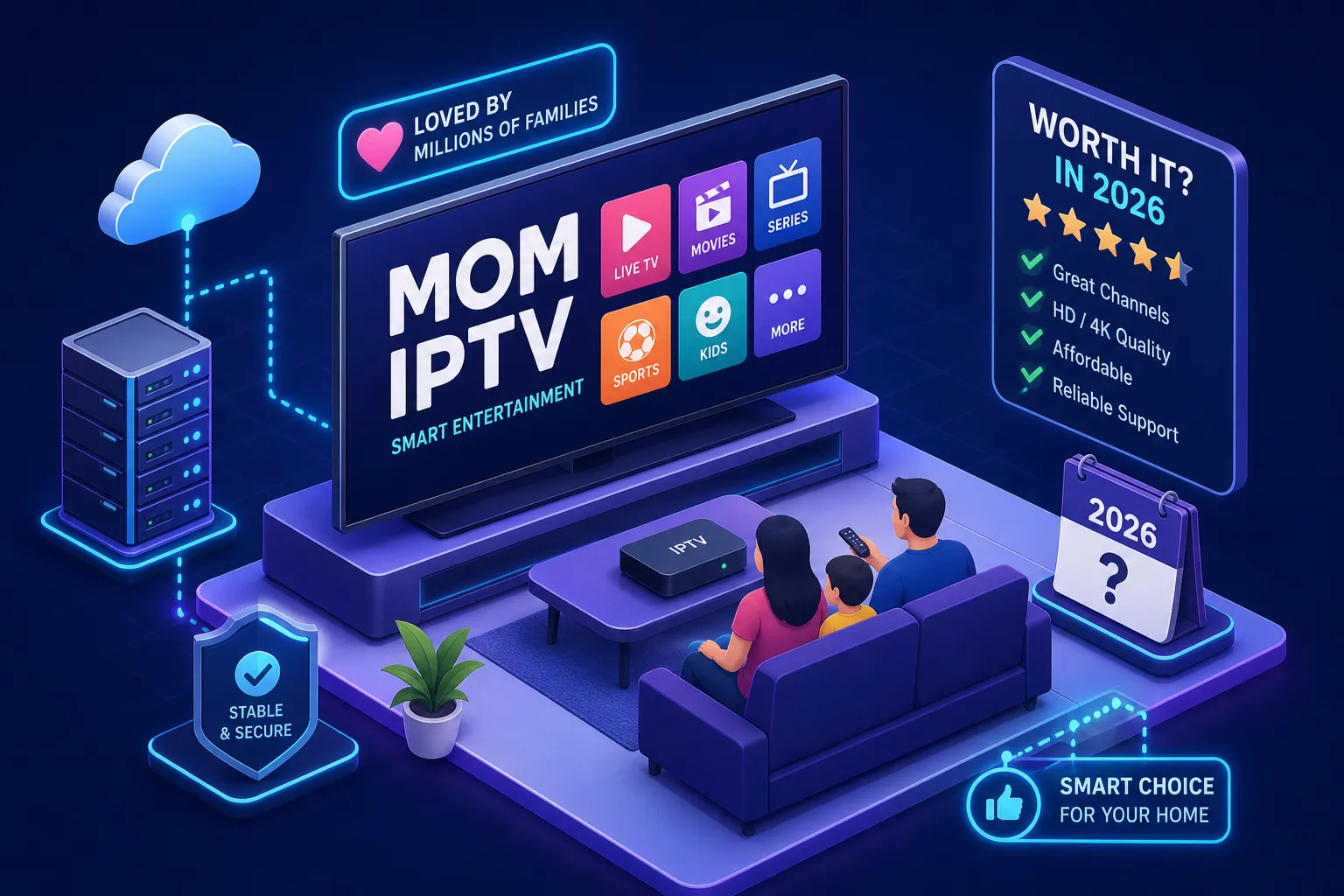
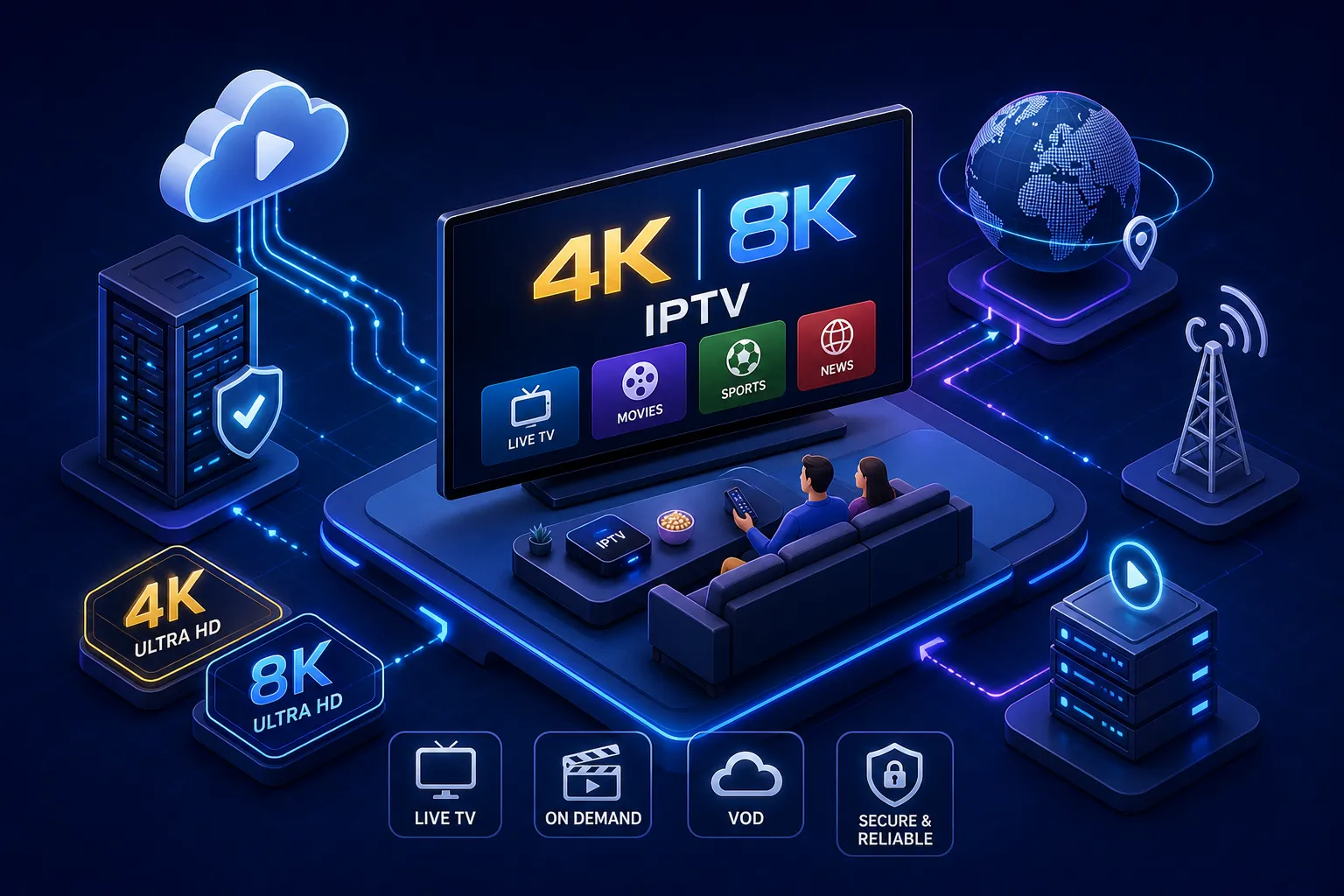
Mom IPTV offers 22,000+ live channels spanning US broadcast networks, cable channels, international programming in dozens of languages, and live sports including NFL, NBA, soccer, and boxing, plus 120,000+ on-demand movies and TV series. That’s a catalog that covers significantly more ground than a standard cable bundle. Content is available in HD, FHD, UHD, and 4K depending on the channel and your connection, so you’re not settling for lower quality to save money.
Anti-freeze technology and server reliability built in
Mom IPTV is built on servers designed specifically to handle high-traffic events, think NFL Sunday or boxing pay-per-view nights, using anti-freeze techniques like adaptive bitrate switching and redundant routing that compensate for congestion before it reaches your screen. This directly addresses the biggest concern new IPTV subscribers have before making the switch: will it actually hold up when it matters? The infrastructure is designed to handle simultaneous load across a large subscriber base without degrading the viewing experience.
Pricing, plans, and what getting started looks like
Plans at Mom IPTV start at $13 per month, with subscription tiers available at 1, 3, 6, and 12 months. Multiple connection slots are available depending on the plan, which works well for households where more than one person streams at a time. Account activation is immediate after purchase, no hardware installation, no technician scheduling, no waiting around. New subscribers also get a 7-day money-back guarantee, which removes the financial risk from trying the service. Support is available 24/7 via WhatsApp and email for setup questions, technical issues, or anything else that comes up.
What you need before subscribing to a ptv service
Your device and internet setup
Most modern devices work with a quality IPTV service, Smart TVs, Amazon Firestick, Android TV boxes, iOS or Android smartphones, and desktop computers are all commonly supported, though it’s worth confirming device compatibility with any provider before you subscribe. The only other requirement is a stable broadband connection. For HD and FHD viewing, 25 Mbps is generally sufficient. For 4K or multiple simultaneous streams, 50 Mbps or higher gives you the headroom to avoid quality issues.
How to evaluate a provider before committing
Before paying for a longer-term plan with any provider, verify three essentials: a free trial or money-back window, transparent pricing with no hidden fees, and real customer support you can reach before you subscribe to confirm it exists. A provider that buries its support contact info or makes vague technical claims without specifics is usually worth skipping. The IPTV space has reliable options, but it also has providers that overpromise and underdeliver on stream quality when traffic gets heavy.
The simplest path to getting started
Getting started is straightforward: choose a plan, activate your account immediately after purchase, and open the app on your device. No equipment fees, no 24-month contract, no technician to schedule. If you’re ready to make the switch, Mom IPTV combination of channel depth, server reliability, 4K quality, and 24/7 live support makes it a strong starting point for anyone exploring ptv services in 2026. The 7-day money-back guarantee means you can verify it works for your setup before you’re committed to anything.
The bottom line on ptv services in 2026
IPTV delivers what cable promised and never quite delivered: live TV, sports, international channels, and massive on-demand libraries, all on your terms, on your schedule, on any device you already own. The key to a good experience is choosing a provider with stable server infrastructure, real anti-freeze technology, and live human support when you need it.
Mom IPTV checks every box covered in this article. The channel library is one of the largest available, the server infrastructure is built for reliability under load, and the pricing structure makes the cost advantage over cable immediately obvious. Starting at $13 per month with a 7-day money-back guarantee, the decision to try it carries very little financial risk.
If you’ve been thinking about cutting cable, 2026 is the easiest year to make that move. The technology has matured, the content libraries have expanded enormously, and the savings over cable are impossible to ignore. Ready to switch? Try ptv services with Mom IPTV and see the difference for yourself.