The IPTV market is more crowded in 2026 than it has ever been, and picking the wrong service means paying for something that freezes during the fourth quarter of an NFL playoff game. This article delivers a detailed look at what Mom IPTV actually delivers, covering everything that matters before you subscribe: content depth, streaming performance, device setup, pricing, and support quality. No hype, no filler.
The information below draws from verified pricing pages, documented user reports, and real-world setup walkthroughs. By the end, you will know exactly whether Mom IPTV fits your setup, your budget, and the way your household watches TV.
Mom IPTV Services and Reviews: Channel Coverage, VOD, and Content Depth
Before subscribing to any IPTV service, the two numbers that matter most are the live channel count and the depth of the on-demand library. Those two figures tell you whether a service can genuinely replace cable or just supplement it for one or two categories. After reviewing the full Mom IPTV services and reviews picture, here is what the content side actually looks like.
How the live channel count breaks down
Mom IPTV’s main services page lists 18,000+ live channels across 50+ regions, while a separate channel-list page claims up to 25,000+ broadcast video channels. Treat 18,000+ as the reliable baseline, since that figure appears most consistently across verified plan pages. For context, a typical cable package delivers 200 to 500 channels. The gap is significant.
The regional distribution is where the numbers become meaningful for specific households. Key regional breakdowns include USA (400+), Latin America (700+), France (500+), UK (300+), Turkey (250+), Netherlands (250+), India (250+), Arabic (180+), Germany (120+), and Canada (90+). For multicultural households, sports fans tracking international leagues, and expats who want home-country programming, that kind of regional spread matters more than the total headline count.
VOD library and content types
Every Mom IPTV plan includes access to 120,000+ on-demand titles covering movies and full TV series. Unlike live TV, VOD lets you pause, rewind, and watch entirely on your schedule. There is no tiered content access based on plan length: a one-month subscriber gets the same channel count and VOD library as a twelve-month subscriber. That 22,000+ channel library combined with 120,000+ VOD titles at a single subscription price represents a coverage footprint that no standard cable package matches, which makes the pricing comparison later in this article particularly striking.
Video quality options and what to realistically expect
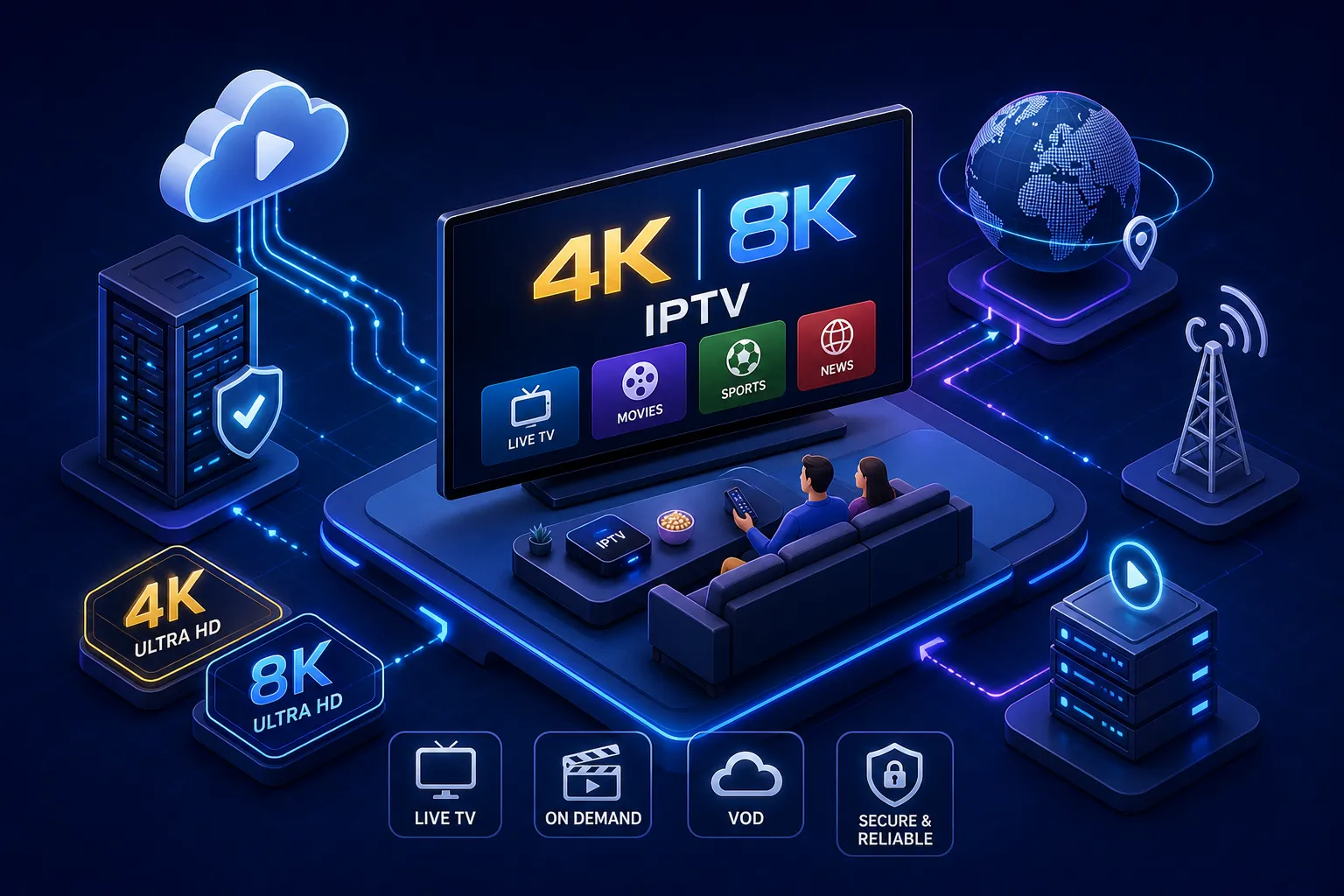
Mom IPTV supports HD, FHD, UHD, and 4K. HD and FHD are the most consistently available formats across the library and are where most users will spend the majority of their viewing time. 4K content exists and performs well when available, but delivery depends on specific titles and your network conditions. For most home setups, FHD is the practical sweet spot: it looks excellent on a 55-inch or 65-inch screen without demanding a premium internet connection.
Mom IPTV Services and Reviews: Real-World Streaming Performance
Every IPTV provider claims zero buffering and 99.99% uptime. Those are marketing figures. What actually matters is how the service behaves during a live NBA game on a Saturday night when thousands of subscribers are streaming simultaneously.
Uptime claims vs. documented user experience
Mom IPTV’s own pages advertise 99.9% to 99.99% uptime. User reviews on forums like Reddit’s r/IPTV and third-party aggregator sites broadly describe the service as reliable for everyday use, though no IPTV service realistically sustains perfect availability. Brief maintenance windows, server load during peak hours, and your own internet connection stability all factor into the actual experience. Across dozens of documented user reports, Mom IPTV is consistently described as more stable than many budget IPTV options, without being called flawless.
Buffering and peak-hour performance
Multiple user reports flag occasional buffering during peak viewing windows, specifically during live sports and major events. Standard HD viewing runs smoothly for most users under normal conditions. The trouble spots are predictable: major sporting events on weekends, primetime hours, and high-demand concurrent streams. This is worth setting expectations around before you subscribe, especially if live sports are your primary use case.
The overall pattern from user feedback is that Mom IPTV anti-freeze server technology and high-speed infrastructure contribute to solid daily performance, while the peak-hour congestion that affects every large IPTV service still surfaces occasionally. No server architecture eliminates demand spikes entirely.
What streaming quality to expect by resolution
HD and FHD playback is smooth and consistent across most network conditions, based on documented user experience. 4K streaming performs well when the content is available in that format and when your connection supports it. The general guideline for 4K IPTV is a minimum of 25 Mbps on a single device, with 35 to 50 Mbps providing a more stable experience. For multi-device households, multiply that figure by the number of simultaneous streams running.
Setting up Mom IPTV on your device: step-by-step for every major platform
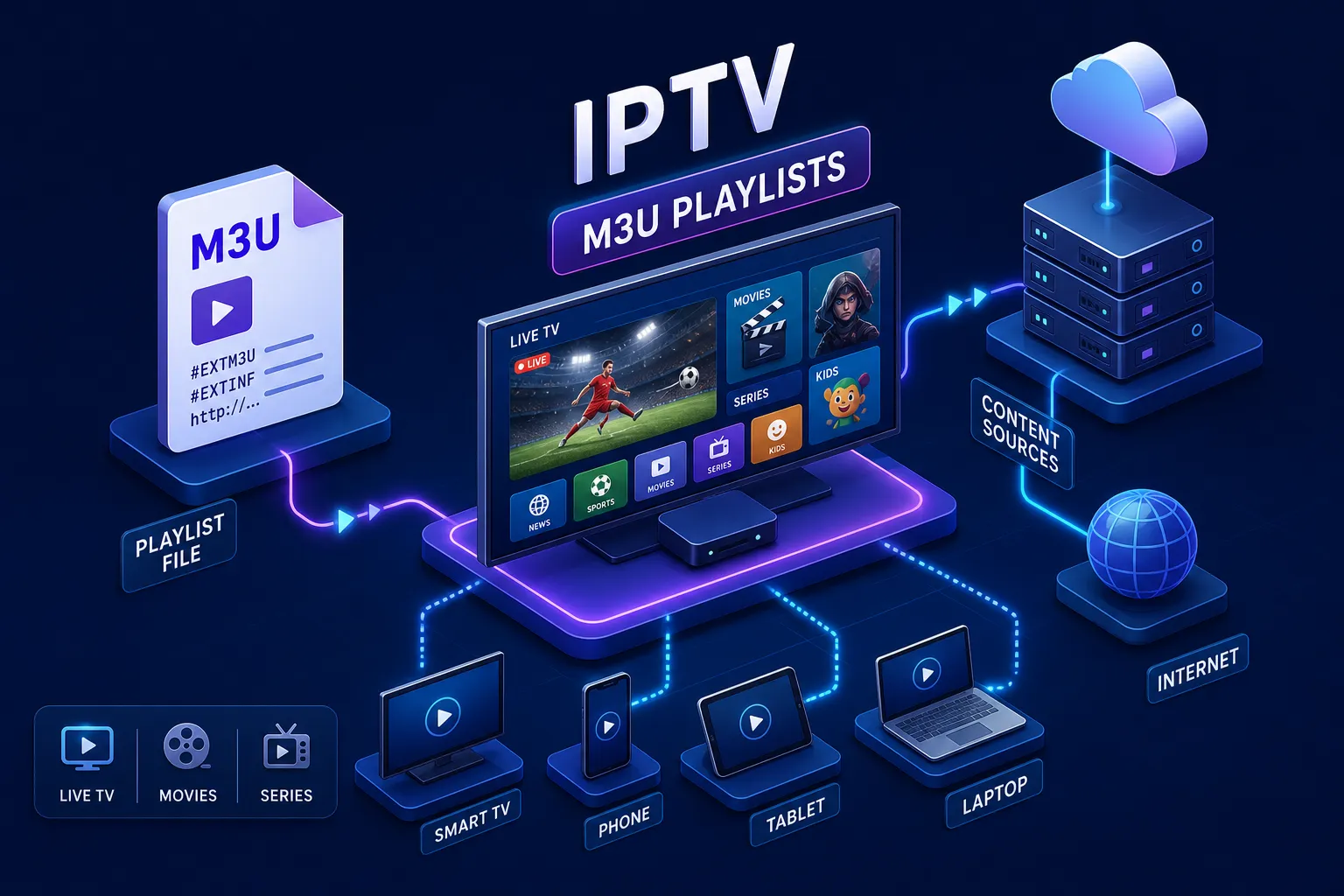
IPTV setup is where most beginners get stuck. The process is straightforward once you know which app to use and what credentials to enter. The general pattern across all platforms is the same: install a compatible IPTV player app, then enter your M3U URL or Xtream Codes login details from your confirmation email. Activation is instant after purchase, with no hardware installation required.
Amazon Firestick setup (the most common US setup)
- Go to Settings > My Fire TV > Developer Options and enable “Apps from Unknown Sources” or “Install unknown apps” for Downloader.
- Install the Downloader app from the Amazon App Store.
- Use Downloader to sideload IPTV Smarters Pro or TiviMate via the APK link.
- Open the app and select “Add User” with Xtream Codes or M3U URL.
- Enter the server URL, username, and password from your Mom IPTV subscription confirmation email.
TiviMate is a top-rated Firestick IPTV player in 2026, recognized for its clean Fire TV interface, EPG handling, and smooth playback. IPTV Smarters Pro is a strong free alternative and works equally well with both M3U and Xtream Codes credentials.
Android, iOS, and Smart TV setup
For Android, install IPTV Smarters Pro or TiviMate directly from the Play Store, then add your Xtream Codes or M3U credentials and save the profile. For iOS, use IPTV Smarters Pro, GSE Smart IPTV Pro, or iPlayTV from the App Store; the credential entry process is identical. For Samsung and LG Smart TVs, install Smart IPTV, SS IPTV, or Net IPTV from your TV’s app store and enter the M3U playlist URL provided after purchase.
MAG box and advanced device setup
For MAG boxes, the setup works differently from app-based platforms. Enter the portal URL from your Mom IPTV subscription directly into device settings under System > Servers > Portals. Reboot after saving, and the channel list loads automatically. For Enigma2 boxes and similar set-top devices, the M3U import method applies. All of these devices are officially supported, and your activation credentials arrive immediately after purchase with no waiting period.
Mom IPTV Services and Reviews: Pricing, Trials, and Refunds
Pricing is one of the most important factors when evaluating any IPTV provider. Most services charge between $10 and $25 per month, with longer-term plans offering meaningful discounts. Mom IPTV falls squarely in the middle of that range, based on verified 2026 pricing data.
Current 2026 pricing across plan lengths
- 1 month: $13 to $20.00 (single connection)
- 3 months: $26.00 to $40.00
- 6 months: $42.00 to $56.00
- 12 months: $64.00 to $90.00
There is slight variation across different pages, and all figures above reflect the single-connection tier. Annual plans bring the effective monthly cost down to roughly $5 to $7 per month. For comparison, US cable TV bills averaged over $83 per month in 2026, often climbing to $100 to $147 when fees and bundles are included. The math strongly favors IPTV for households that don’t need a specific regional sports contract.
Multi-connection plans for households
For households with multiple TVs or concurrent viewers, multi-connection plans are available. One-month pricing runs approximately $25.00 for 2 connections, $35.00 for 3, $39.00 for 4, and $45.00 for 5. Annual multi-connection plans are available at proportionally better value per month. If your household regularly watches on more than one screen at once, the multi-connection tier is the right starting point.
Trial options and the refund question
No clearly documented free trial appears on the main Mom IPTV subscription pages as of 2026. Some resellers may offer trial access, but that is not confirmed on the primary service pages. A 7-day money-back guarantee appears in some third-party writeups, but it is not prominently featured on the official site. The safest approach is to contact support directly via WhatsApp before committing to a longer plan if a trial period is a deciding factor for you. Start with the one-month plan if you prefer to test the service at low cost before going annual.
Customer support quality: what’s available and what users report
Customer support is where the gap between budget and premium IPTV providers is most visible. A service with 18,000 channels is only as reliable as its ability to help you when something stops working at 9 PM on a Sunday before kickoff.
Mom IPTV offers three support channels: WhatsApp for fast responses, live chat on the website for real-time assistance, and email with a stated response window of within 24 hours. Support is advertised as available 24/7 and covers setup help, activation issues, billing questions, and troubleshooting.
User reviews are mostly positive about live chat, with responses described as arriving within minutes for common issues. WhatsApp support is noted as particularly accessible for non-technical users who prefer messaging over browsing a help center. The mixed feedback centers on email response delays during high-volume periods and occasional inconsistency when handling more complex issues, like missing channels from specific regions or multi-device configuration problems. The clearest pattern across user reviews: support performs reliably for activation and setup questions, which covers the majority of what new subscribers actually need. 24/7 human support via WhatsApp and live chat is a genuine differentiator in this market, where many competing providers offer only ticket-based or community support with multi-day turnaround times.
Honest verdict: who Mom IPTV is built for and where it falls short
After reviewing the channel coverage, performance data, device compatibility, pricing, and support structure, here is a clear picture of who this service works well for and where it has real limitations.
The genuine strengths are consistent: a large channel library with strong international coverage, straightforward setup across all major streaming devices, competitive pricing at the annual tier, and accessible human support available around the clock. HD and FHD streaming quality is consistently smooth for most users on standard broadband connections, which is what the majority of households actually need day to day.
The real gaps are just as clear. Occasional buffering during peak sports events is a documented user complaint, not a theoretical edge case. Trial and refund terms are not transparently stated on the main site, which creates uncertainty for first-time buyers. Pricing varies slightly across pages, which can confuse new subscribers comparing plans.
Best fit for:
- Cord-cutters replacing cable with a single subscription under $15 per month
- Sports fans who want NFL, NBA, soccer, and international leagues in one place
- Multicultural households needing Spanish, Arabic, South Asian, or European channels
- Users already owning a Firestick, Android box, or Smart TV
Not ideal for:
- Users who require a confirmed free trial before paying anything
- Viewers who need consistent 4K across a large content library
- Households with internet speeds below 15 Mbps
Frequently asked questions
Is IPTV legal in the United States?
IPTV technology itself is legal. The legality depends on whether the service holds licensing agreements for the content it distributes. Services streaming licensed content operate legally; those redistributing channels without authorization do not. Research any IPTV provider’s content licensing status before subscribing, since the legal responsibility shifts at the provider level, not the viewer level.
What’s the best device for IPTV streaming?
Amazon Firestick is the most popular US choice in 2026 due to its price point and broad app support. Android TV boxes offer more flexibility for power users. Smart TVs work well for anyone who wants no extra hardware. The best device is the one you already own, provided it supports a compatible IPTV player app like TiviMate or IPTV Smarters Pro.
How much internet speed do I need for IPTV?
The practical minimums are 10 Mbps for HD, 20 Mbps for FHD, and 25 Mbps or higher for 4K on a single device. For households running multiple simultaneous streams, multiply accordingly. A wired Ethernet connection is more stable than Wi-Fi for live sports and high-resolution content, and it eliminates a common source of buffering complaints.
Does Mom IPTV offer a free trial?
No confirmed free trial appears on the main subscription pages as of 2026. Some resellers may offer trial access. Contact support directly via WhatsApp or live chat to ask about trial options before committing to a plan. If a trial is not available, the one-month plan at $12.99 to $14.00 is a low-risk way to test the service on your own setup without duplicating what’s covered in the pricing section above.
Can I watch on more than one TV at the same time?
Yes. Multi-connection plans support simultaneous streams on 2, 3, 4, or 5 devices. Single-connection plans restrict use to one device at a time. If your household watches on multiple screens regularly, the multi-connection pricing tiers are designed for exactly that use case and offer better per-device value than buying separate single-connection subscriptions.
How does IPTV compare to cable TV in cost?
US cable bills averaged over $83 per month in 2026 and often exceed $100 once fees and bundled services are factored in. Mom IPTV subscriptions start under $15 per month with no hardware installation, no contract, and no hidden equipment fees. The trade-off is that reliability depends on your internet connection quality, which cable does not require.
The bottom line on Mom IPTV in 2026
IPTV is no longer a niche option for tech enthusiasts. It is a mainstream alternative to cable for millions of US households, and the right service depends on your content priorities, your devices, and your tolerance for occasional peak-hour hiccups. The category has matured enough that comparing services on channel count, device support, and pricing is a practical exercise, not a leap of faith.
Overall, our Mom IPTV services and reviews find it a strong option for cord-cutters who value international channels and affordable pricing. The service delivers on the core promise: an 18,000+ channel library with solid international coverage, reliable HD and FHD performance for everyday viewing, flexible pricing that undercuts cable significantly, and accessible 24/7 human support via WhatsApp and live chat. It is not flawless, and no IPTV service is. But the combination of coverage depth, device compatibility, and pricing makes it a compelling choice for households ready to cut the cord without sacrificing live sports or international channels.
If you’re on the fence, start with the one-month plan, test it on your device during your usual viewing hours including a live sports event, and make the call from there. The annual tier offers the best value if the service meets your expectations after that first month.